The final whistle sounded on July 19. Stadiums emptied, watch parties ended, and social feeds began moving toward the next cultural moment. The retail aisle did not pause.
The 2026 FIFA World Cup brought 48 teams together across 104 matches, creating more than a month of concentrated attention, community gatherings, brand sponsorships, and consumer activity.
For CPG brands, however, attention is not the same as loyalty.

Many brands treated the tournament as the main event in their Hispanic marketing strategy. They invested in sponsorships, social content, retailer promotions, influencer partnerships, events, and product sampling. Once the tournament ended, so did the campaign.
That leaves much of the investment working for only a few weeks.
A stronger post World Cup marketing strategy asks a different question: What did the brand earn during the tournament that can still influence a purchase in October, November, or December?
The World Cup Created Attention. Q4 Will Test the Relationship
Soccer sponsorship can influence how Hispanic consumers see a brand. Nielsen found that 50% of Hispanic soccer fans feel more loyal to companies that sponsor the sports they follow, compared with 38% of the general population.
But sponsorship creates an opening, not a guaranteed sale.
Consumers may remember seeing a logo, sampling a product, scanning a QR code, or attending an event. The brand still needs to give them a reason to choose the product when they return to the store.

The months after the tournament include back to school shopping, Hispanic Heritage Month, Día de los Muertos, Thanksgiving, Las Posadas, Christmas, New Year celebrations, and local community events. Not every household observes these occasions in the same way, so brands should move from broad visibility toward specific consumer needs, markets, and shopping moments.
The opportunity is not to keep repeating World Cup content. The opportunity is to carry the relationship forward.
A Hispanic Marketing Strategy for Q4
Brands can turn tournament activity into Q4 retail growth through four connected actions.
1. Review What the Campaign Produced
Before approving another creative brief, review the evidence from the World Cup campaign.
Identify which stores generated the most product interest, which messages prompted action, which markets engaged, and which consumers gave permission for future communication. Review QR code scans, email or SMS opt ins, product feedback, store sales, retailer observations, and social engagement.
The review should tell the team what to repeat, what to stop, and where to invest next.
A campaign with 20,000 views but no identifiable consumer action may offer less value than a smaller activation that captured 800 interested shoppers, useful product feedback, and sales growth in three priority stores.
The goal is not more data. It is better business decisions.
2. Segment Consumers by Behavior and Market
A common Hispanic CPG marketing mistake is placing everyone who engaged into one general Hispanic audience.
The consumer who attended a family event may have different needs from the shopper who sampled the product at retail. Language preference, generation, location, retailer habits, household structure, and product familiarity can all influence the next purchase.
Organize audiences by what they did. Useful groups might include consumers who sampled but did not purchase, shoppers who purchased and joined the database, people who viewed recipe content, and consumers located near priority retailers.
Then connect each group with a relevant product use, offer, store, or occasion.
Culture should inform the strategy. Consumer behavior should determine the next action.
3. Connect Live, Play, and Shop
An effective Q4 Hispanic marketing strategy should continue the relationship where consumers live, play, and shop.
………………

LIVE: Continue the Conversation at Home
Nielsen reported that 70 percent of Hispanic World Cup fans planned to engage through social media and tournament mobile apps. This shows that the tournament experience extended well outside television and stadiums.
Brands can continue that digital relationship with content built around product use rather than recycled soccer graphics.
A food brand might share family recipes, lunch ideas, celebration menus, or product tips tied to the next retail occasion. A beverage brand could introduce serving ideas for gatherings. A household brand could focus on routines that become relevant during the school year and holiday season.
The content should answer a useful question: Why should this product remain part of the household after the tournament?
………………

PLAY: Stay Present in Community Moments
The end of the World Cup does not end soccer fandom. Local leagues, school sports, community tournaments, retailer events, and family gatherings continue throughout the year.
Brands can maintain cultural presence through smaller, local experiences instead of trying to recreate the scale of the tournament. A youth soccer event, neighborhood celebration, cooking clinic, retailer parking lot event, or culturally relevant festival may create stronger consumer interaction than another broad awareness campaign.
The right community moment should connect to the product and the people who actually buy it. Presence without relevance becomes decoration.
………………

SHOP: Give the Consumer a Reason to Choose Again
Give consumers a clear reason to choose the product again. Connect the message to an in store experience, recipe, bundle, mobile offer, display, bilingual product explanation, or QR code that provides value after the scan.
The shelf should sit at the center of the plan. Creative content will have limited effect if the product is unavailable, the offer is difficult to redeem, or the promoted item does not match the retailer’s Q4 priorities.
Every retail activation should answer three questions:

- What should the shopper understand?
- What should the shopper do?
- What happens after the purchase?
When these answers work together, product trial has a better chance of becoming repeat purchase.
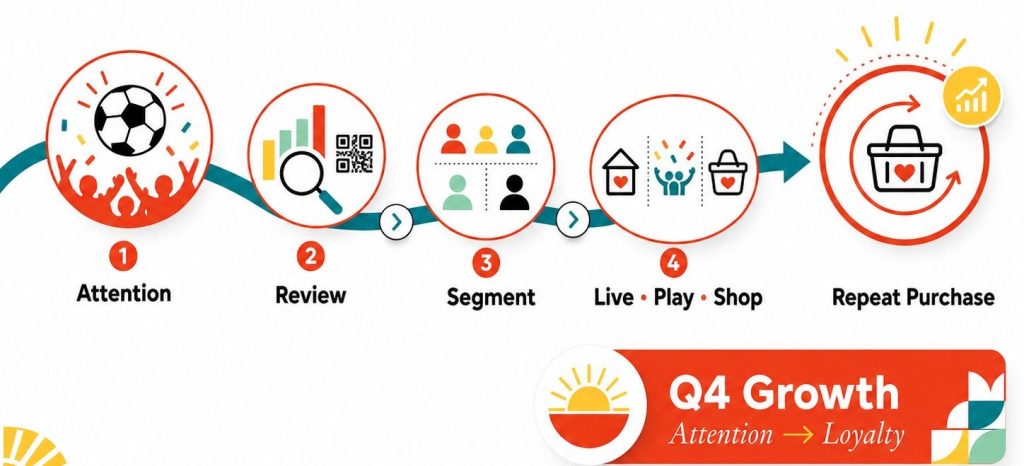
4. Report What Changed
World Cup recap reports often focus on impressions, attendees, samples, views, posts, and scans. Those numbers explain what happened, but leadership will also want to know what changed.
A useful measurement plan should connect four levels of performance:

Attention: Reach, content views, video completion, and event attendance.
Action: QR scans, opt ins, coupon downloads, survey responses, and content saves.
Retail: Samples distributed, units sold, conversion, store velocity, and offer redemption.
Relationship: Repeat engagement, database growth, email response, product sentiment, and signs of repeat purchase.
The team does not need to report every available metric. Select the measures that answer the business question.
Did awareness generate trial? Did trial generate purchase? Did the brand create a way to continue the relationship? Did supported stores or markets perform better?
A large dashboard can still hide the answer.
A Simple 90 Day Planning Calendar
During the first 15 days, review campaign results, organize consumer data, identify high performing markets, and document field insights.
During days 16 through 45, test follow up messages, product education, retailer offers, and audience segments. Small tests can show which message and offer prompt the strongest response.
During days 46 through 90, connect the strongest message to retail activity, community experiences, digital follow up, and relevant Q4 occasions. Review performance weekly and adjust stores, content, staffing, or offers based on the findings.
This sequence turns a short cultural campaign into an ongoing Hispanic consumer engagement plan.
Four Questions Every Brand Team Should Answer
Before approving the Q4 plan, ask:

- Which consumers, stores, and markets engaged during the World Cup?
- Do we have permission and a useful reason to contact those consumers again?
- Does the next campaign connect to a real product use or shopping occasion?
- Can we show leadership what changed in consumer behavior or retail performance?
A missing answer may reveal a break between tournament attention and Q4 growth.
The Real Opportunity Starts After the Final Whistle

The World Cup gave brands access to one of the year’s largest cultural conversations. The brands that gain the most will not be those that published the most tournament content. They will be the ones that learned from the consumer response and turned those findings into a stronger retail plan.
For an overextended brand leader, the task is not to create more activity. It is to connect the activity already funded to the next measurable consumer action.
………………
Request a Q4 Hispanic Growth Strategy Session
Bring one product, one priority market, and the results from your World Cup campaign. Together, we can identify where attention is being lost, which Q4 occasions fit the brand, and what the next 90 days should accomplish across consumer engagement and retail.
The final whistle ended the tournament.
What did your World Cup investment leave behind: a month of attention, or a reason for consumers to choose your brand again?
→ Request a Hispanic Strategy Session
For more knowledge and insights subscribe to our newsletter HERE.