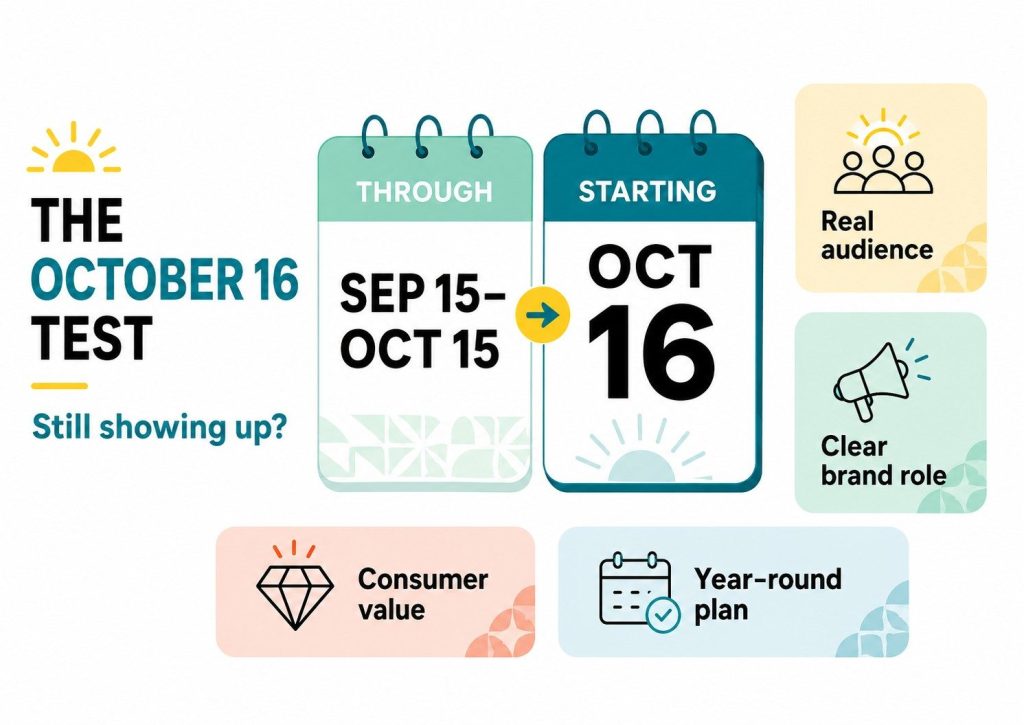
Here is a useful test for any Hispanic Heritage Month marketing campaign:

- What will still be true about your brand on October 16?
- Will Hispanic consumers still be part of your marketing strategy?
- Will you continue working with Hispanic creators and communities?
- Will the consumer insights gathered during the month influence future decisions?
If most of that activity stops when Hispanic Heritage Month ends, the issue may not be the campaign creative. The issue may be that the campaign was built around a calendar moment instead of a consumer relationship.
For CPG marketers, that distinction matters. Authentic Hispanic marketing is not created by adding cultural imagery, translating existing copy into Spanish, or selecting a Hispanic influencer. It starts by understanding who the consumer is, why the brand belongs in the conversation, and what value the brand can bring.
Authentic Hispanic Marketing Starts Before the Creative
One of the most common mistakes in Hispanic Heritage Month marketing happens before anyone designs an ad or writes a caption: the audience is defined simply as “Hispanic consumers.” That is not specific enough to guide a marketing strategy.
The U.S. Hispanic market includes consumers with different national origins, generations, language preferences, locations, shopping behaviors, and relationships with culture. A bilingual second generation shopper in Los Angeles may respond differently than a Spanish preferred household in Houston. For CPG brands, geography becomes even more important because these distinctions often appear at the retailer, store, and ZIP code level. NeoSol’s Hispanic Retail Growth Playbook recommends thinking locally and accounting for the differences within the Hispanic market rather than treating it as one national audience.
Before approving a Hispanic Heritage Month campaign, there are five questions worth answering.
1. Who Are We Actually Trying to Reach?
Go past basic demographics and define the consumer in the context of your category.

- Where do they shop?
- How do they use the product?
- Which occasions matter?
- What influences trial or purchase?
- What cultural context could affect how they understand the brand?
The better the audience definition, the less likely the creative team is to fall back on assumptions or broad cultural references. Cultural relevance becomes easier when the strategy begins with a real consumer rather than a generic demographic label.
2. Why Does Our Brand Belong in This Moment?
Not every brand needs a Hispanic Heritage Month campaign. Sometimes choosing not to force a cultural connection is a smarter decision than creating one simply because the date appears on the marketing calendar.
Look for a credible connection between your product, category, consumer, retailer, community, or brand history. A food brand might help families discover a recipe or new usage occasion. A beverage could participate in a gathering where the product already has a natural role. A retailer might spotlight Hispanic founders, products, employees, or community partners.
The connection does not need to be dramatic. It needs to make sense. If the main explanation is simply, “We want to celebrate Hispanic culture,” the strategy probably needs more work.
3. What Does the Consumer Receive From Us?
Representation can matter, but representation alone is not always a reason for someone to engage with a brand. Ask what value the consumer receives in exchange for their attention.
That value could come through product discovery, education, entertainment, a useful recipe, an experience, community support, an offer, or a new way to use the product. This question helps marketers connect cultura with the category instead of treating culture as decoration around the product.
4. What Happens After Hispanic Heritage Month?
A September campaign should not carry your entire Hispanic marketing strategy.
Think about the relationship that comes next and how each consumer touchpoint can support it.

A shopper might first discover a product through a creator, experience it at retail, scan a QR code for a recipe, purchase it, and later receive relevant content.
The exact sequence will change by brand, but the principle stays the same: retail, community, social media, creators, and digital engagement should support one consumer strategy rather than operate as unrelated activities.
NeoSol’s Hispanic Retail Growth Playbook approaches these touchpoints across the places consumers live, play, and shop, connecting marketing activities around a shared consumer objective.
5. How Will We Know if It Worked?
Do not let “engagement” become the default KPI. Give Hispanic Heritage Month a specific business job first, and then determine which measures can show whether that job was accomplished.

If the objective is product discovery, you might examine qualified reach, trial, shopper feedback, or product education.
If the objective is retail conversion, look at purchases, units sold, retailer feedback, or performance against an appropriate baseline.
If the goal is building a permission based audience, QR activity, opt ins, and subsequent consumer interaction may be more useful.
Cultural response should also be considered. Consumer comments, surveys, field observations, creator feedback, and social sentiment can help teams understand whether the intended message connected in the way they expected. The measurement plan should reflect both the business objective and the role culture was meant to play.
Give Hispanic Heritage Month a Business Job
One of the simplest ways to move away from performative marketing is to stop asking, “What should we do for Hispanic Heritage Month?” and start asking, “What should Hispanic Heritage Month help our brand accomplish?”
Perhaps the brand wants to introduce a product in a Hispanic priority market. Maybe the goal is to strengthen an existing consumer relationship, support a retail partner, or learn more about a specific shopper segment before making a larger investment next year.
Once that job is defined, the audience, experience, channels, creative, and KPIs become easier to evaluate. It also gives the marketing leader something stronger to bring to management. Instead of asking leadership to approve a cultural celebration, you are presenting a defined consumer, a business objective, a cultural rationale, an activation plan, and a measurement strategy. That is a much stronger case for investment.
The October 16 Test
Before approving your Hispanic Heritage Month marketing plan, return to the original question:

Would this idea still make strategic sense on October 16? If the answer is yes, you are probably building from a consumer strategy rather than a marketing calendar.
Hispanic Heritage Month can create an important moment for brands to celebrate, listen, learn, and connect. But Hispanic consumers should also appear in product launches, retailer planning, shopper marketing, research, media strategy, community relationships, and measurement throughout the year.
………………
If your team is planning Hispanic Heritage Month or building a broader Hispanic marketing strategy, the 2026 Hispanic Retail Growth Playbook provides a practical framework for audience segmentation, local market planning, consumer touchpoints, and measurement.
The real test of Hispanic Heritage Month marketing is not only what your brand says between September 15 and October 15. It is what the consumer continues to see from you after everyone else has stopped talking.
→ Request a Hispanic Strategy Session
For more knowledge and insights subscribe to our newsletter HERE.